Our Catholic Life
Religious Education
At St Thomas More’s Catholic Primary School, Religious Education is central to daily life and our school curriculum. Inspired by our mission statement, “As we walk together with Jesus, we live, love and learn,” we strive to lead each child to a deeper relationship with God and a fuller understanding of the Catholic faith.
Religious Education at St Thomas More’s is founded on the teachings of the Church and the example of Jesus Christ. It aims to:
- Nurture a living faith – helping children come to know, love, and follow Jesus through prayer, Scripture, and the Sacraments.
- Deepen understanding of Catholic teaching – developing knowledge of the beliefs, traditions, and practices of the Church.
- Form conscience and character – guiding pupils to live out Gospel values such as compassion, forgiveness, justice, and love.
- Celebrate liturgy and prayer – fostering a strong sense of Catholic identity through Mass, prayer, and the liturgical seasons of the Church year.
- Build community and mission – encouraging children to serve others and witness to their faith in everyday life.
- Respect all people and faiths – promoting understanding and dialogue in the spirit of Christ’s love for all.

St Thomas More's School Religious Education Curriculum
The RED religious education programme of study has a framework with four structural elements: curriculum branches, knowledge lenses, ways of knowing, and expected outcomes.
1. Curriculum Branches
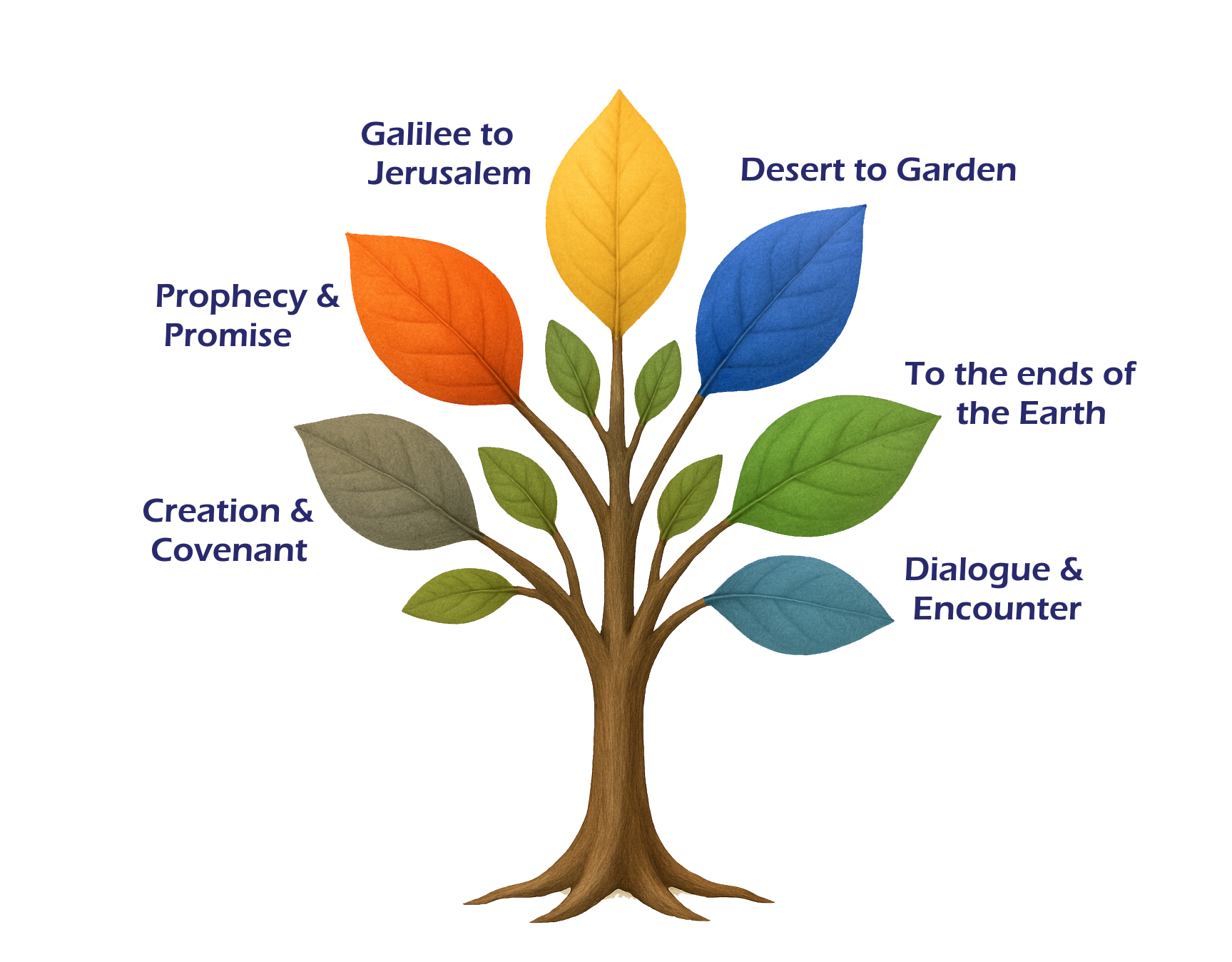
The programme is organised into six “curriculum branches,” one for each half-term of the school year. These branches follow the narrative of salvation history and guide pupils through a clear learning journey each year. As pupils return to each branch annually, they build on what they already know and deepen their understanding of its importance for Catholic belief and practice. We are currently using Magister resources to support our children's learning.
The six themes around which all teaching is focused are:
- Creation and Covenant (pupils will encounter the God who creates and calls to people)
- Prophecy and Promise (pupils will explore the Christian understanding of the teaching of the prophets as they point to the fulfilment of God’s promise in a messiah, Jesus Christ)
- Galilee to Jerusalem (pupils will learn about the life of Jesus, the call of the disciples and the nature of being a follower of Jesus)
- Desert to Garden (pupils will study the season of Lent and its culmination in the events of Holy Week)
- To the ends of the Earth (pupils will study the events that flowed from the Resurrection and Ascension in the coming of the Holy Spirit and the work of the apostles and early Church)
- Dialogue and Encounter (pupils will learn how Christians work together with people of different religious convictions and will also encounter other pathways of belief)
2. Knowledge Lenses
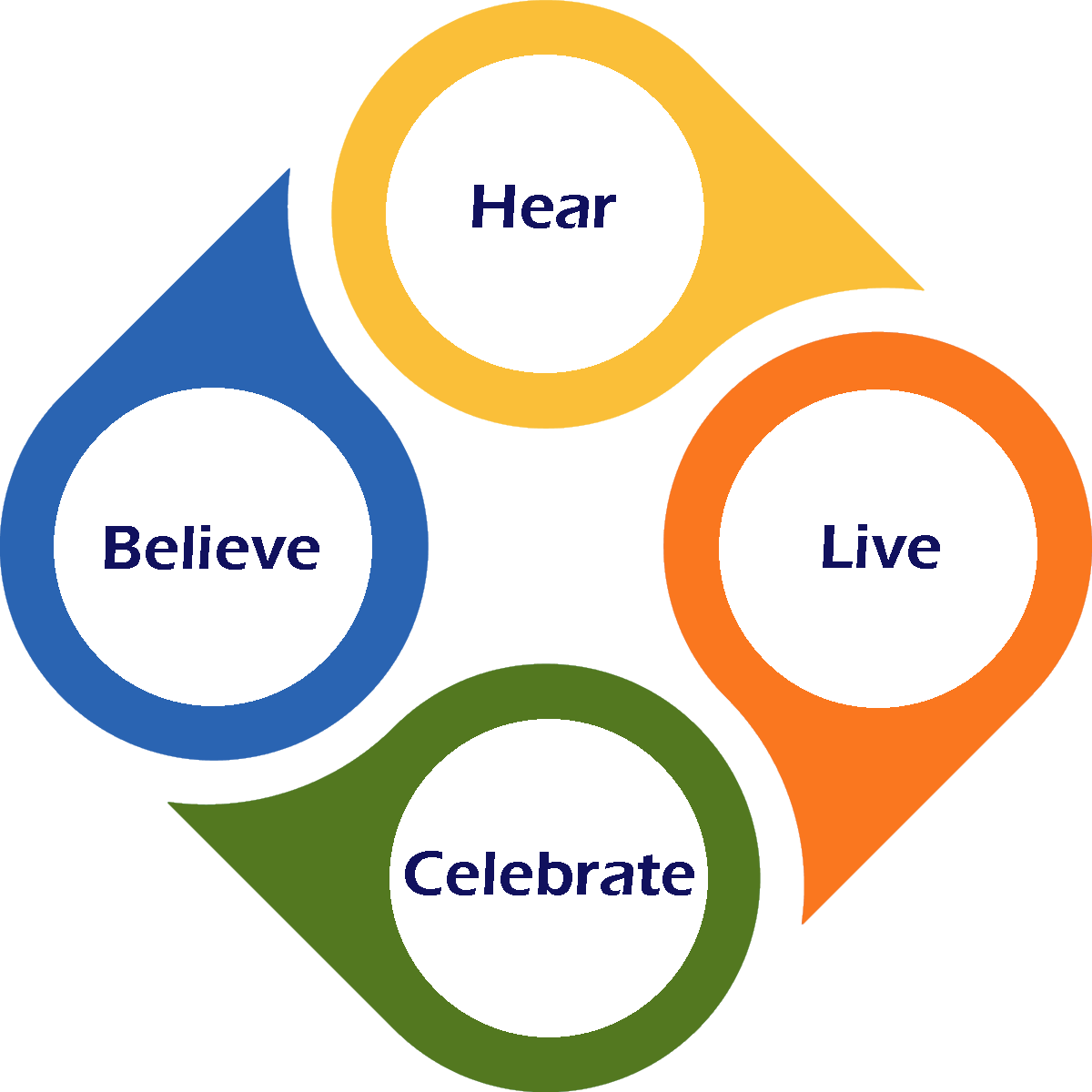
These set out the object of study for pupils; they indicate what should be known by the end of each age-phase. They are referred to as lenses, since they are the things we are looking at and they divide the content of the programme of study into four systematic sub-sections.
They are based on the four main parts of the Catechism and are:
- Hear - this lens focuses on the Word of God which we hear from the Word made flesh, Jesus Christ.
- Believe - this lens focuses on the content of the Church’s own profession of faith; what it believes, professes, defines, and teaches.
- Celebrate - in this lens we look at prayer, liturgy, and sacraments.
- Live - this lens focuses on the impact of faith on how Christians live their lives.
3. Ways of Knowing
Ways of knowing set out the skills that pupils should be developing as they progress through their
curriculum journey. Whenever we know something, we always know it in more than one way.
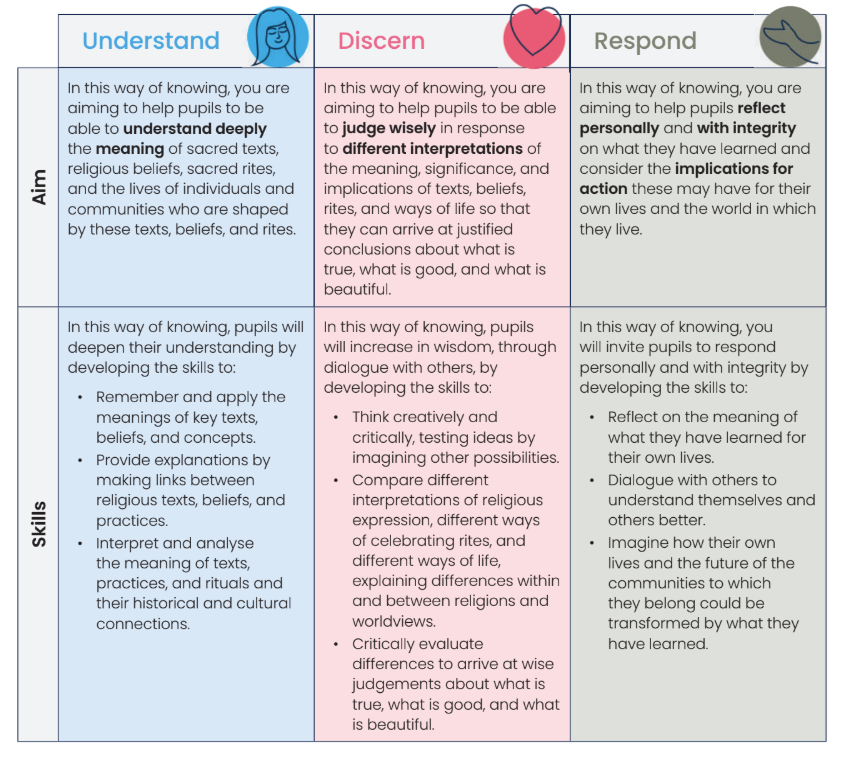
The three ways of knowing are:
- Understand
- Discern
- Respond
These are represented in the programme of study by icons:
- Head (understand - know more)
- Heart (discern - understand more)
- Hands (respond - do more)
4. Expected Outcomes
Each age group has a set of outcomes that will indicate what pupils are expected to know, remember, and be able to do, using the language of the ways of knowing and applying it to the knowledge within each of the four lenses.
Targets are set appropriate to the age range in question (5-7 years, 7-9 years and 9-11 years).
For further details please see the full Religious Education Directory, included below.
Religious Education Directory